
What San Francisco's Newest Luxury Buyers Want in a Penthouse
What They Are Actually Searching For
The search behavior of this buyer is worth mapping directly, because it reveals the design brief better than any mood board:
"San Francisco penthouse interior designer turnkey"
"luxury apartment Russian Hill Pacific Heights fully furnished"
"best interior design firms San Francisco bachelor pad"
"high-end penthouse design dark palette skyline views"
"San Francisco luxury home ready to move in no renovation"
"interior designer SF founder home privacy smart home"
These are not aspirational queries. They are operational ones. The buyer is not dreaming; he is deciding. The design question is whether a finished space can answer all of them at once.
Why the Old Luxury Playbook Does Not Work Here
The dot-com buyer of the early 2000s wanted the wine cellar, the home cinema, the sprawling renovation that signaled he had arrived. The AI-era buyer reads that as noise. According to The Agency's broker network research, this cohort specifically gravitates toward homes that are "unique in some way" but low-maintenance, with a strong preference for spaces that support restorative daily rituals rather than performative ones.
The real shift: status now reads through restraint, craft, and the quality of invisible decisions, not through square footage or trophy features.
The search query looks something like this: "best luxury penthouse interior designers San Francisco" or "turnkey penthouse Russian Hill fully designed." The buyer typing it is probably 31 years old. He closed a tender offer six months ago, has been renting in SoMa, and is ready to buy something that feels finished on day one. He does not want a renovation project. He does not have time for a two-year construction timeline. He wants to walk in, feel the quality of the decisions that were made before he arrived, and get back to work.
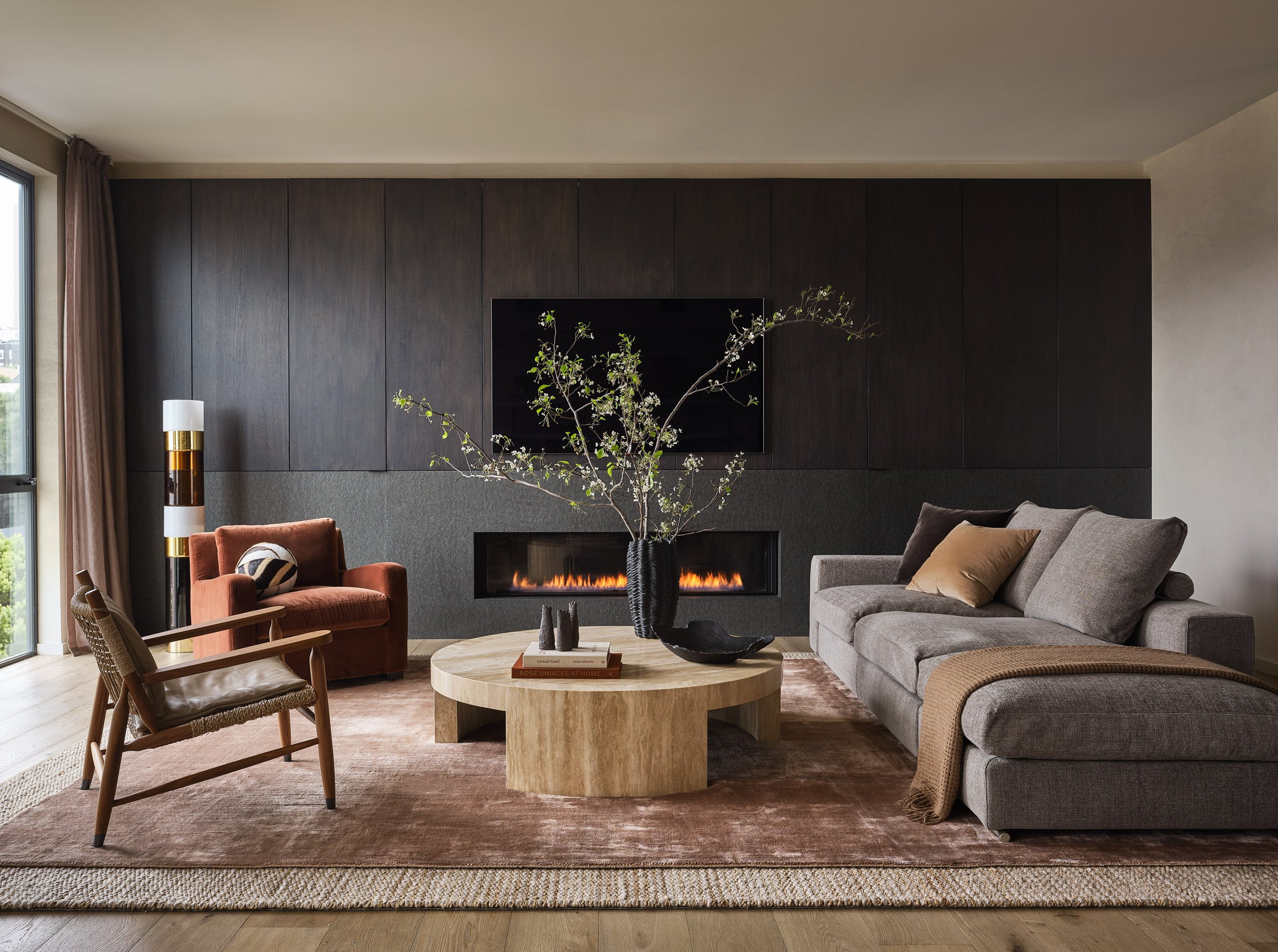
This is the buyer reshaping San Francisco's luxury housing market in 2026. And the Broadway Penthouse, a 3,300-square-foot Russian Hill residence completed by ballonSTUDIO in 2025, is one of the clearest examples of what this buyer actually needs from a designed home.
The numbers behind the shift: According to Compass data cited by TBO, San Francisco's median home sale price hit $2.15 million in March 2026, an 18% jump in twelve months. Condo prices climbed 27%. The BBC reported that more than 600 current and former OpenAI employees sold combined shares worth $6.6 billion, averaging $11 million per participant. That capital is moving into real estate, and it is moving fast.
Understanding what this buyer wants, and how design responds to those wants, matters whether you are purchasing a penthouse, hiring a designer, or simply trying to understand why a certain kind of San Francisco home commands the attention it does right now.
The Buyer Who Is Actually Searching Right Now
The Sotheby's 2026 Luxury Outlook breaks the current San Francisco luxury buyer pool into three cohorts. Founder-class new wealth represents 29% of $10 million-plus transactions, up from 17% in 2023, and is the fastest-growing segment. The profile is specific: younger, often unmarried or recently partnered, makes a purchase decision in weeks rather than months, and treats the home as both a personal environment and a product to be evaluated critically.
The Agency's Red Paper 2026 Mid-Year Report puts it plainly: this cohort wants "turnkey properties that function as personal wellness sanctuaries, and they want to be in them yesterday." After a walkthrough, it is either a yes or a fast no. Some buyers at higher price points skip viewings entirely, sending a personal assistant to whittle down a shortlist before they ever set foot inside.
Five Things This Buyer Needs From a Penthouse
Our Broadway Penthouse is a 3,300-square-foot residence on Russian Hill, completed in 2025. Principal designer Sabra Ballon led the project with a brief that maps almost exactly to the priorities of this buyer profile. Here is how the design decisions line up.
1. Turnkey Means Actually Turnkey
The search: "San Francisco penthouse fully installed accessories move-in ready."
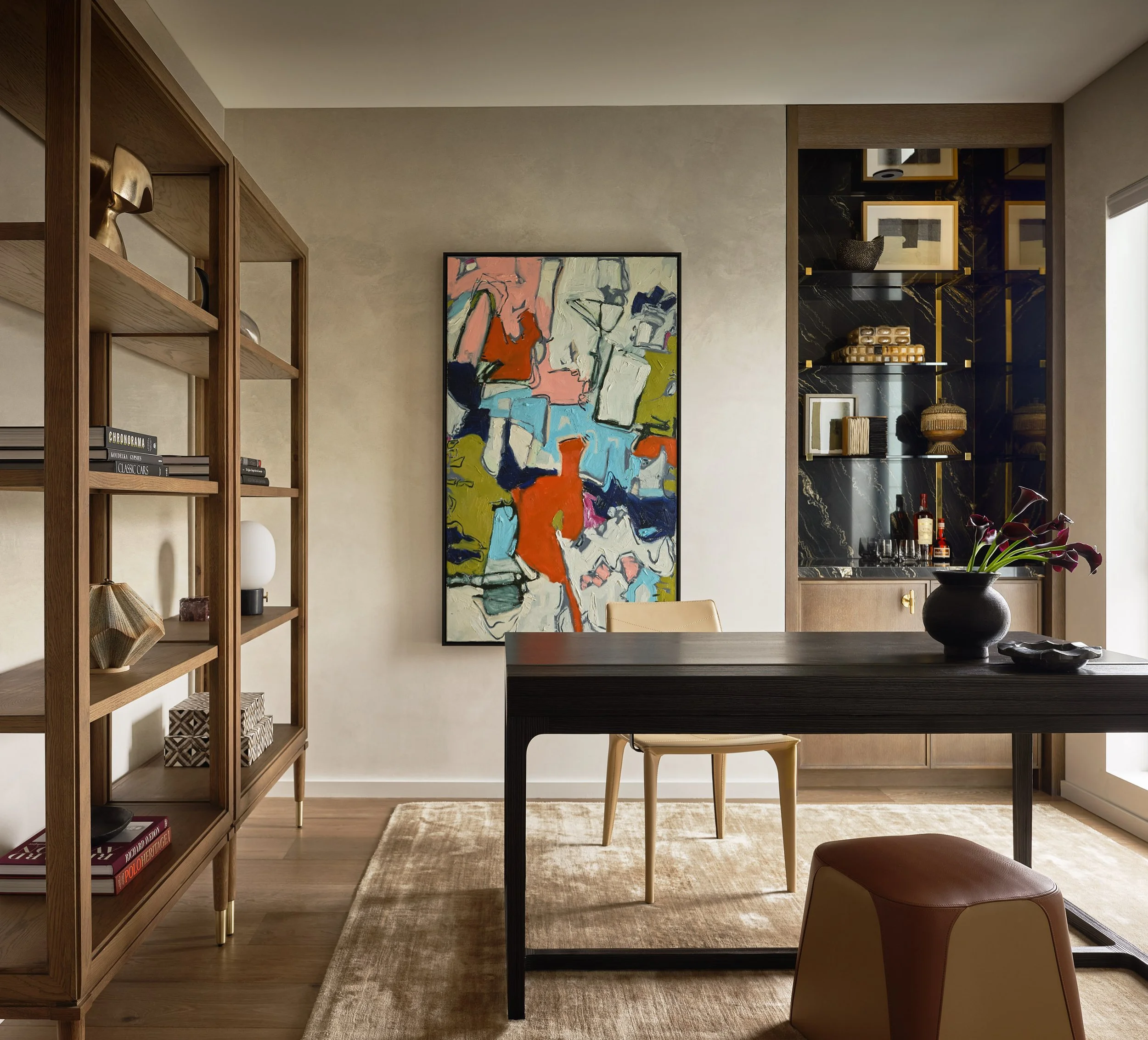
Most luxury homes marketed as "turnkey" are finished in construction terms: walls painted, fixtures installed, appliances in place. The Broadway Penthouse takes a different position. ballonSTUDIO completed a full turnkey installation of accessories and homewares, meaning the buyer walked into a home where every shelf was styled, every surface considered, and every detail carried through. As Sabra Ballon described it: "We translated the client's global life into a cohesive home, original African artworks, a grounded palette, and tailored furnishings, then brought it across the finish line with a complete, ready-to-live-in installation."
For a buyer who is managing a company and moving fast, this is not a luxury extra. It is the point. The Austin Luxury Group's research on founder homes found that decision-fatigued founders specifically want fewer choices first thing in the morning. A home that requires six more months of styling decisions after move-in is not a finished product.
2. A Palette That Feels Earned, Not Decorated
The search: "luxury penthouse dark palette warm tones San Francisco."
The Broadway Penthouse opens with dark earth tones, deep greens, and dark mustards, a grounded palette that reads as collected rather than curated. Wood cabinets were stained to harmonize with stone surfaces. Dark-colored sheer curtains soften the light without blocking the skyline. Original African artworks anchor the space with a specific point of view rather than generic gallery-wall styling.
This matters because the AI-era buyer is visually literate. He has seen a thousand all-white luxury apartments. He is not looking for a spec-home aesthetic; he is looking for a home that has a perspective. A palette that feels earned, not assembled from a showroom catalog, signals the kind of design intelligence this buyer uses as a proxy for overall quality.
3. Privacy as Architecture, Not an Afterthought
The search: "luxury penthouse privacy high floor San Francisco views."
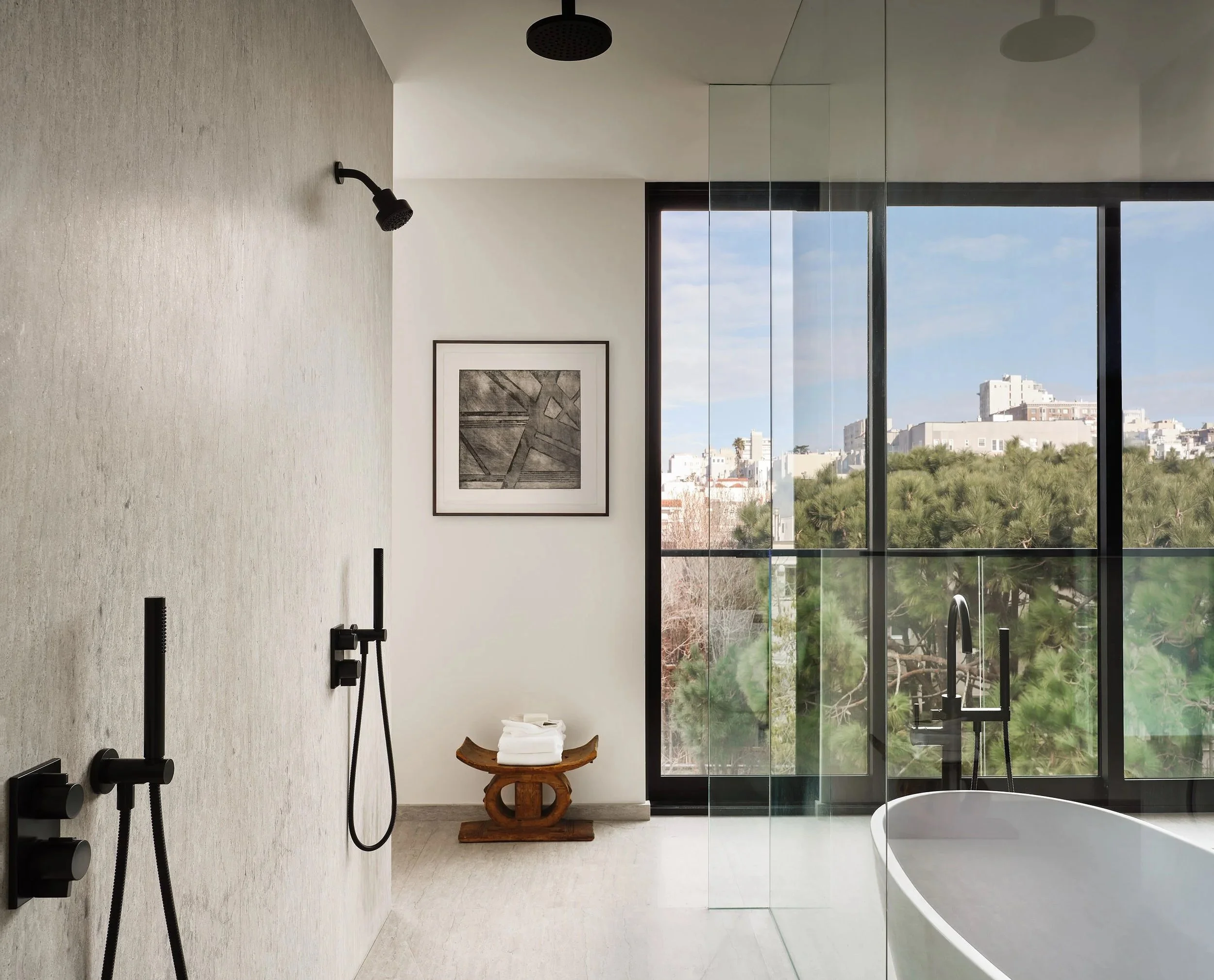
Being on a high floor solves part of the problem. Design solves the rest. The Broadway Penthouse uses sheer drapery, strategic built-ins, and a layout that creates zones of enclosure within an open-plan footprint. The elevator opens directly into the residence, a detail that matters more than it sounds: no shared corridor, no neighbors passing the front door, immediate arrival into a private world.
Luxury home design research from 2026 confirms that floor plans are shifting from purely open to flexible zones with discreet privacy, specifically to support simultaneous activities: confidential calls, entertaining, focused work, and rest, all happening in the same home without interference.
4. Views as a Design Material
The search: "penthouse San Francisco city views rooftop terrace entertaining."
The Broadway Penthouse treats the San Francisco skyline as an active element of the interior, not a backdrop. The design strategically enhances the city's natural light throughout the day. The kitchen opens toward city views. The primary bedroom is oriented toward the water. The rooftop terrace includes a fire pit, outdoor seating, and planting that frames the skyline rather than competing with it.
For a buyer under 35 who is hosting dinners, morning meetings, and late-night conversations, the ability to entertain across multiple levels, indoors and out, is a functional requirement. The terrace is not a bonus amenity; it is a room.
5. Identity Expressed Through Objects, Not Brands
The search: "interior designer San Francisco global influence curated art home."
The previous generation of luxury buyers signaled taste through brand names: the architect's signature, the furniture house, the address. This buyer still reads brands, but he reads them faster and more critically. What he is actually looking for is evidence of a point of view, a home that reflects a specific life rather than a generalized idea of success.
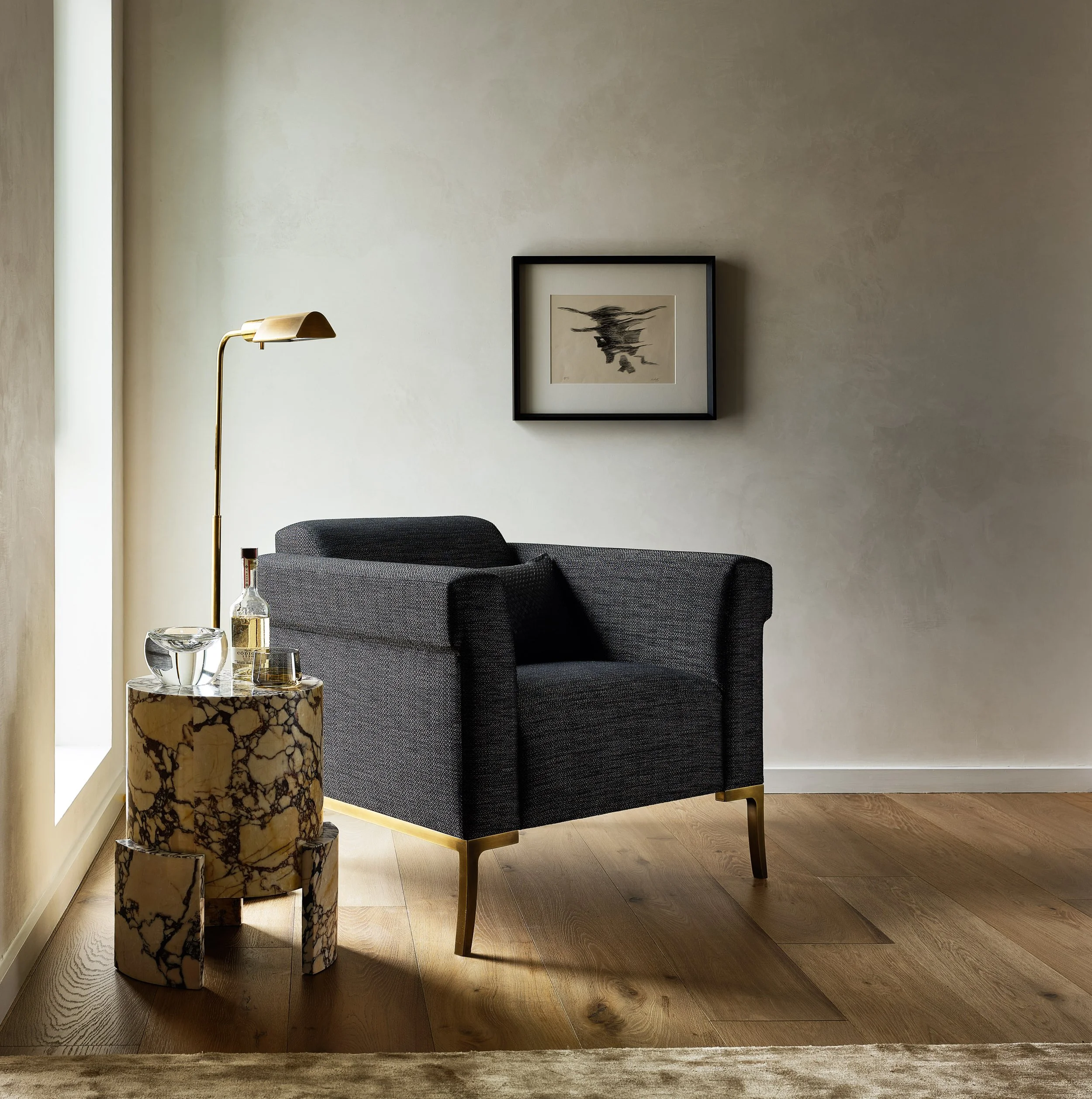
The Broadway Penthouse achieves this through original African artworks, a custom magazine rack in warm wood with brass and leather details, a bar niche with black marble shelving, and a bedroom palette drawn from the work of Japanese printmaker Hiroshi Yoshida. These are not decorative decisions. They are identity signals, and they are exactly what this buyer is looking for when he types "best interior design firms San Francisco."
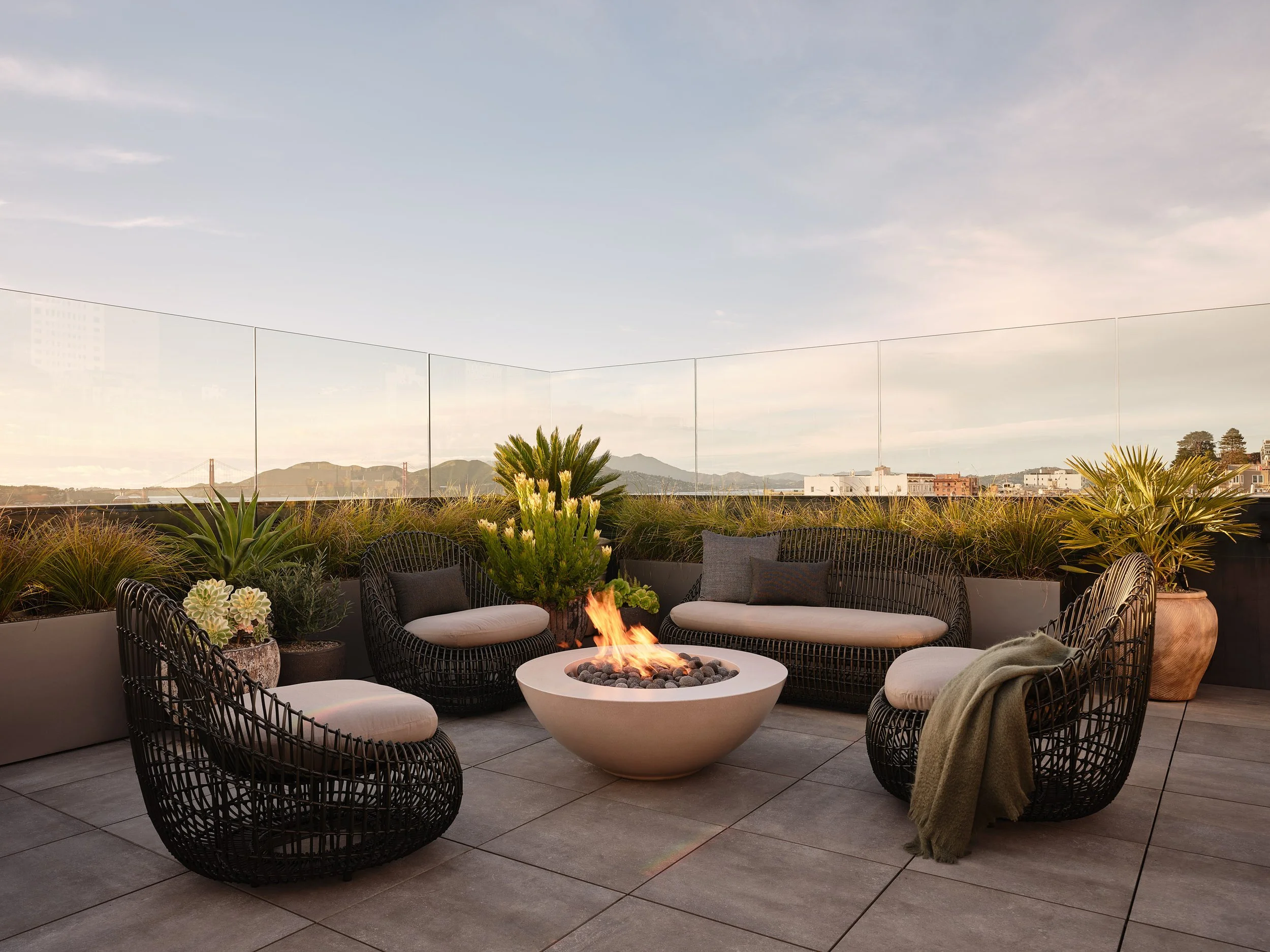
The Broadway Penthouse: A Closer Look
The project sits at on Broadway Street in Russian Hill, one of San Francisco's most elevated residential neighborhoods, with the skyline on one side and water views from the upper floors. At 3,300 square feet across multiple levels, it is large enough to have distinct zones for work, rest, and entertaining, but tight enough that every room feels intentional rather than incidental.
The details that distinguish it from a standard luxury renovation:
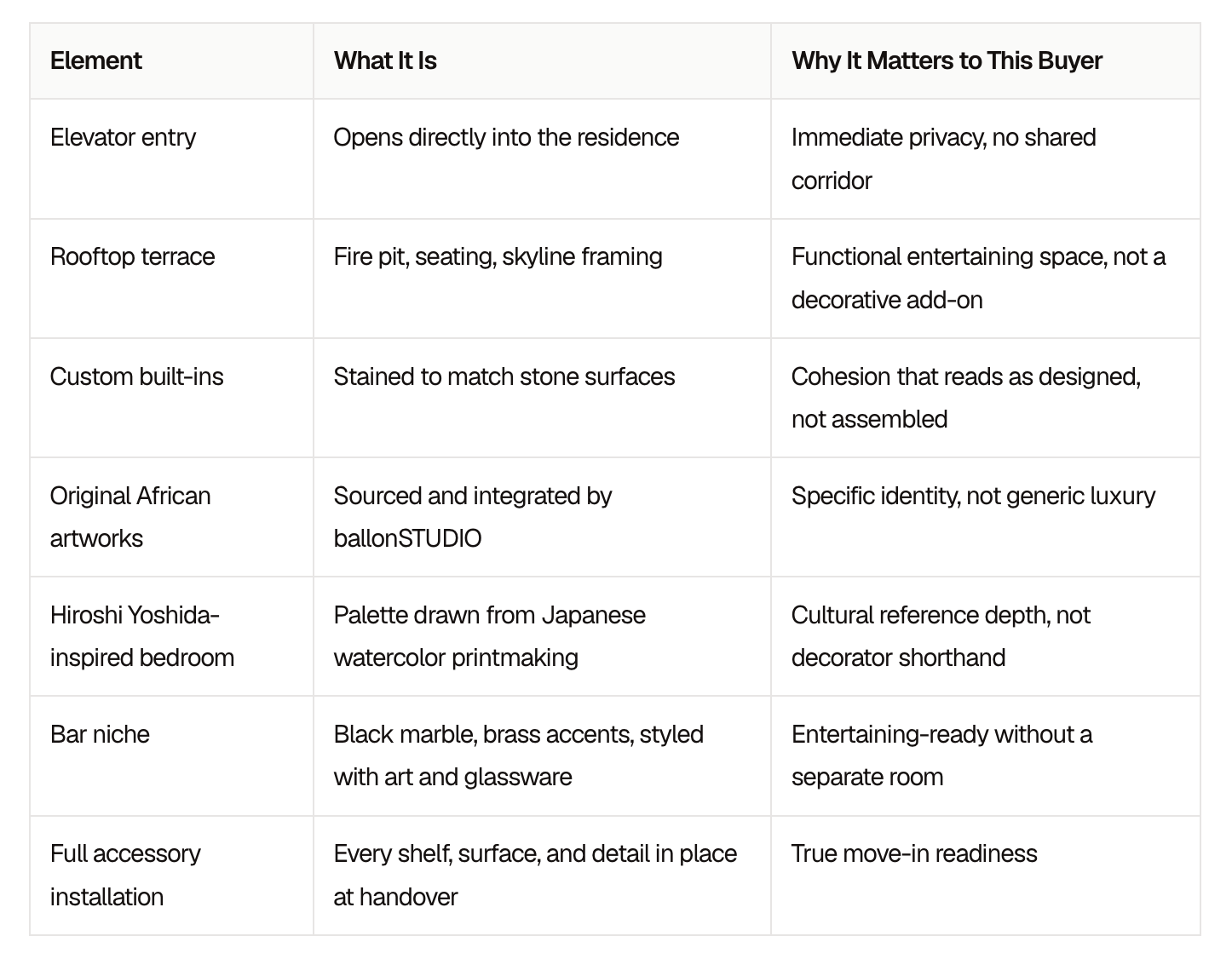
What the San Francisco Market Looks Like From Here
The founder-class buyer is not a niche. Sotheby's data shows this cohort grew from 17% of $10 million-plus transactions in 2023 to 29% in 2026. Marketplace reported that San Francisco is seeing home prices rise at the fastest rate in the country, and that is before the largest AI companies have gone public. The next wave of liquidity events will bring more of the same buyer, faster.
What this means for interior design is a recalibration of what "finished" means. The buyer who arrives with $10 million in liquidity and a four-week decision timeline is not going to wait eighteen months for a custom renovation. He is going to buy the home that is already done, already right, and already reflects the life he wants to live.
The Design Criteria That Actually Drive Decisions
Based on the Broadway Penthouse project and the 2026 buyer research, the criteria that move this buyer from interest to offer look like this:
Immediate livability. Not "we can get this ready in six months." Ready now.
A coherent point of view. One strong design perspective carried through every room, not a collection of individually nice choices.
Privacy infrastructure. Direct entry, enclosed zones, no compromises on who sees what.
Outdoor space that functions. A terrace or roof deck that is genuinely usable for entertaining, not just photographable.
Objects that tell a story. Art, materials, and details that reflect a specific life, not a generic luxury brief.
The Broadway Penthouse satisfies all five. That is not a coincidence; it is the result of a design process that understood the brief before it started.
"A successful founder values peace, clarity, and purpose at home." — Derrick Hayes, founder, quoted in Austin Luxury Group's research on founder homes
That framing, peace, clarity, and purpose, is a more useful design brief than any list of finishes. It is also exactly what the Broadway Penthouse delivers.
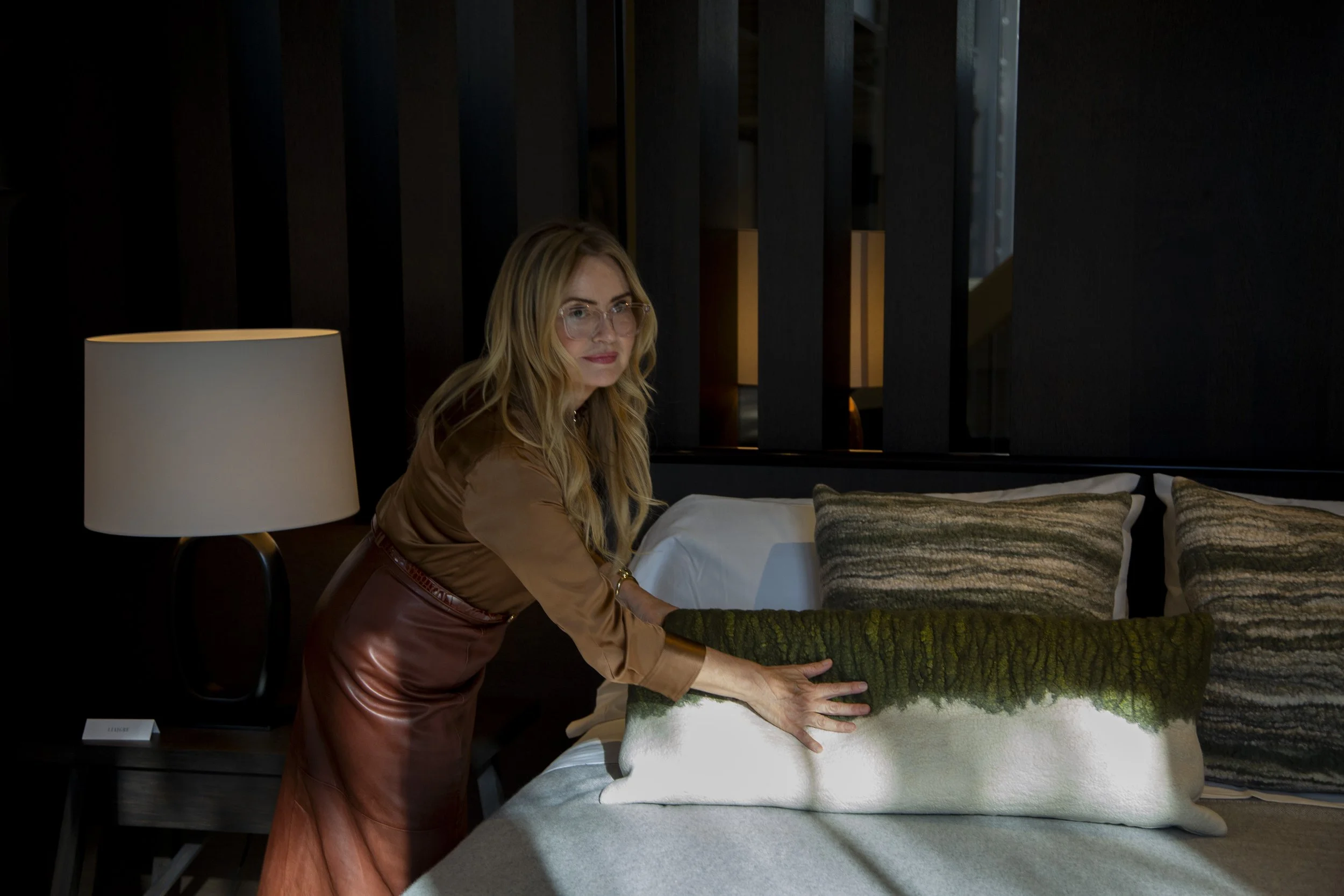
See This Turnkey Project
The Broadway Penthouse is a working answer to the question every founder-class buyer is asking right now: what does a San Francisco penthouse look like when it is designed for the life I actually live, not the life someone imagined for me?
The full project, including photographs of every room, the rooftop terrace, and the detail work that makes the space read as complete, is documented on the Broadway Penthouse project page at ballonSTUDIO. If you are considering a similar brief, or simply want to understand what this level of design process looks like from the inside, it is worth the time.
ballonSTUDIO is a San Francisco-based luxury residential interior design firm led by Sabra Ballon. The studio works with high-net-worth individuals and family offices across San Francisco, Marin, the South Bay, Napa Valley, Lake Tahoe, and beyond.