
The Art of Storytelling in Interior Design
Sabra Ballon on telling a family’s story through their home design, the ultimate luxury of removing friction, and designing spaces that work beautifully.
November 2026 | Podcast Interview
Listen on your favorite podcast app:
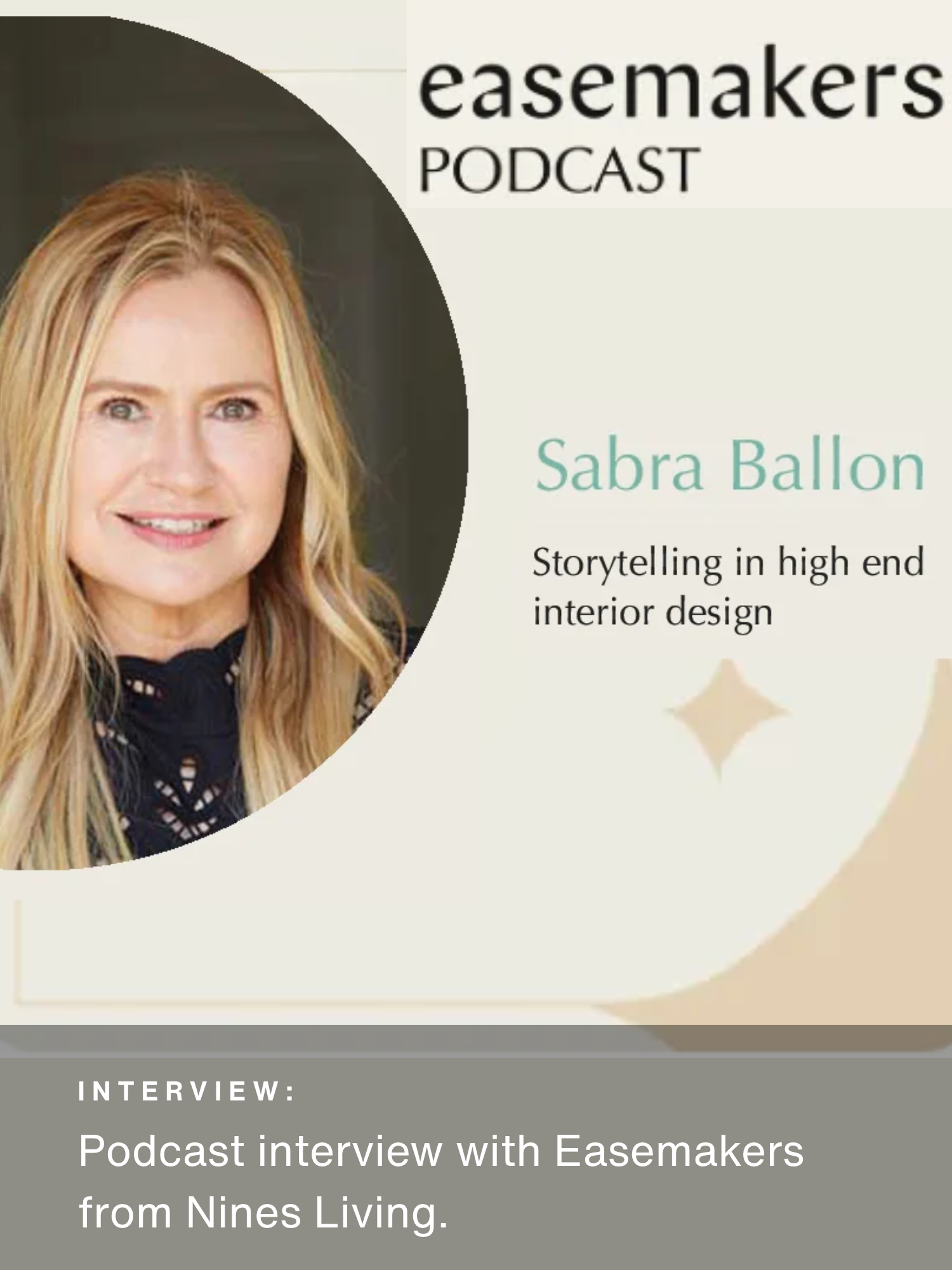
What makes a home feel deeply personal? Is it the architecture, the furnishings, the objects collected over a lifetime, or the way a space makes us feel?
For Sabra Ballon, founder and principal of San Francisco-based interior design firm ballonSTUDIO, the answer begins with the people who live there.
In a recent conversation with Kristin Twiford and Mohamed Elzomor on The Easemakers Podcast, Sabra shares how her background in Hollywood set design, hospitality, and architecture informs an approach to residential interiors rooted in storytelling, thoughtful collaboration, and everyday function.
The conversation explores how personal histories become physical environments, why beautiful design must also work effortlessly, and how interior designers and estate management teams can collaborate to create homes that remain meaningful and functional over time.
“The whole goal with interior design is to tell a story about the family. And so in the beginning when we're getting to know the families, they're telling us their story and then we're translating that.”
-Sabra Ballon, Founder & Principal, ballonSTUDIO
Every Home Has a Story to Tell
Sabra's approach to interior design was shaped in part by her experience working in Hollywood set design, where an environment does more than provide a backdrop. It establishes mood, communicates character, and influences how a story unfolds.
In residential design, she applies a similar perspective. The architecture, materiality, furnishings, artwork, and progression between spaces all contribute to the experience of a home.
A thoughtful interior reveals itself gradually. From the first view of a property to the experience of entering a room, every decision contributes to a larger narrative.
For Sabra, that narrative begins with understanding her clients.
Before designing, ballonSTUDIO undertakes an extensive discovery process, asking family members about their routines, values, personal collections, favorite places, and what they hope their home will make possible.
Among the questions Sabra asks:
How do you want to feel when you enter your house?
What problems is this project going to solve for you?
How is your life going to change through this project?
What do you want the house to say about you?
These conversations help uncover the personal priorities that ultimately shape the design.
The goal is not simply to create a beautiful home. It is to create an environment that reflects its occupants while supporting the lives they want to lead.
Personal Collections, Family History, and the Art of Context
The most meaningful elements of a home are not always new.
In the podcast, Sabra describes a Napa Valley project in which a family wanted to incorporate inherited antiques and a collection of dark pewter objects into a contemporary residence.
Rather than treating the pieces as incompatible with the modern architecture, ballonSTUDIO explored how their sculptural qualities could become part of the design.
The pewter collection was arranged as a series of dark forms against a lighter background, while an antique desk became a focal point within the contemporary interior.
The contrast allowed both the architecture and the inherited pieces to take on new significance.
“Anything can be beautiful in the right context.”
For Sabra, the relationship between past and present is not about forcing objects into an aesthetic. It is about understanding why they matter and finding the environment where they can be most fully appreciated.
That perspective extends to designing for family relationships.
In another San Francisco project, ballonSTUDIO designed a guest bedroom for grandparents whose granddaughters regularly visit. Two twin beds provide the girls with their own sleeping spaces while allowing the room to convert into a king bedroom for other guests.
The solution is practical, but its origins are personal: making space for the relationships that matter most to the family.
Designing for the Lives People Actually Live
One of the most compelling examples from the interview involves a San Francisco residence designed for a former professional athlete. The client's priorities centered on fitness, sports, and staying connected to live games. Rather than treating these interests as secondary considerations, ballonSTUDIO integrated them into the design.
The resulting fitness room included wood-paneled walls, a walnut cabinet for equipment, a leather-wrapped exercise ball, and carefully selected flooring materials that balanced durability with visual appeal.
A separate golf simulator room incorporated felt panels and substantial drapery to address acoustics and the practical demands of the activity. Throughout the home, televisions displayed artwork when not in use, allowing the family to follow sports without introducing unnecessary visual distractions.Each decision reflected the family's priorities while contributing to the character of the residence.
The project demonstrates how understanding a client's life can lead to highly specific design solutions that might never emerge from a purely aesthetic brief.
The Ultimate Luxury
Perhaps the most defining insight from Sabra's conversation is her perspective on what luxury actually means.
“I think that the ultimate luxury is removing friction.”
For ballonSTUDIO, beautiful design and everyday functionality are inseparable.
Sabra's earlier work in hospitality reinforced this principle. While designing hotels, she learned how important it was to consider the perspectives of housekeeping teams, operators, and guests alongside the creative vision.
A beautifully designed room is less successful if guests struggle to operate the lighting, close the shades, or navigate the space intuitively. She carries these lessons into residential projects, particularly homes that span multiple properties.
Consistency in everyday details, such as lighting controls, room layouts, and household systems, can make it easier for families and their guests to move comfortably between residences.
Material selection also plays a significant role.
In the interview, Sabra discusses the value of natural materials such as solid wood and stone, which can often be refinished or restored over time. While these materials may require ongoing care, their durability, distinctive character, and ability to be renewed make them thoughtful choices for homes designed to be enjoyed and maintained for generations.
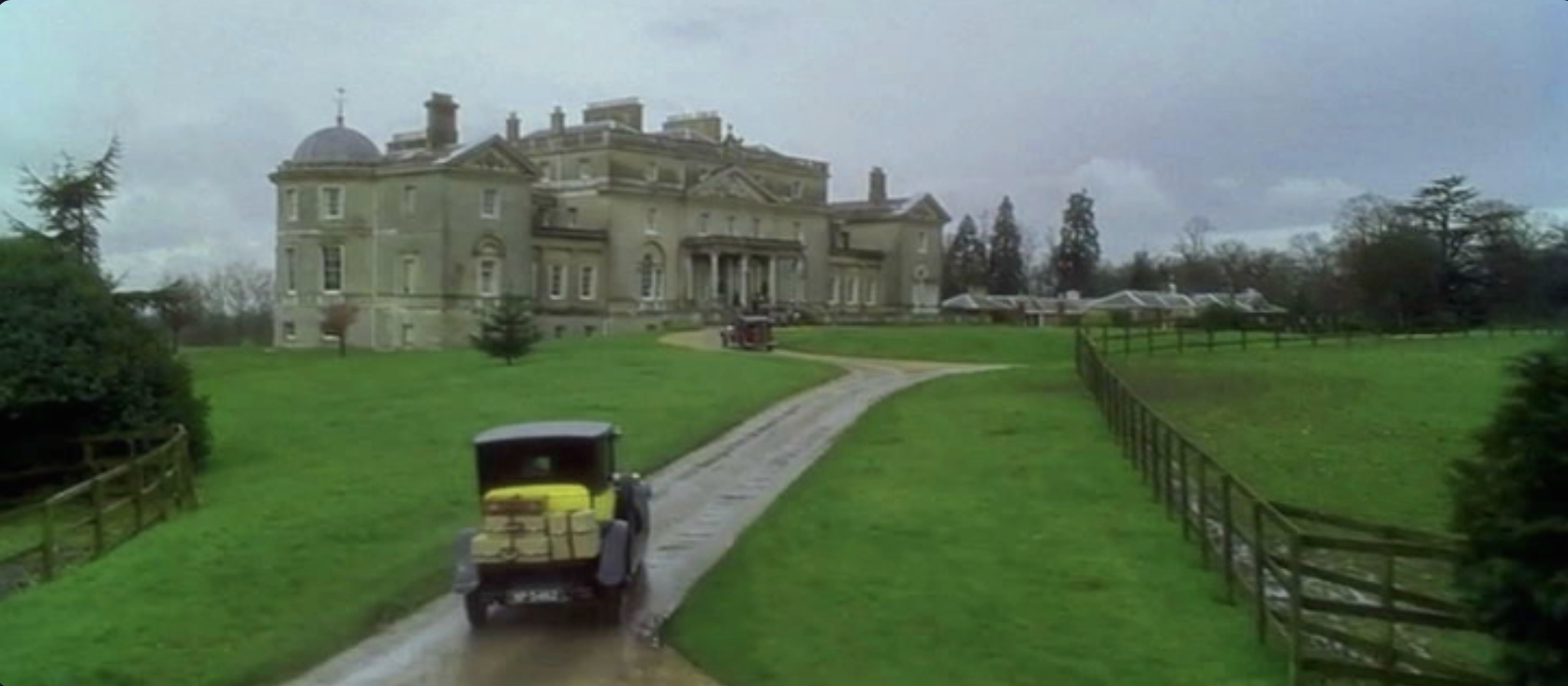
Why does Sabra mentions the Gosford Park house? Explore the conversation
Explore the Full Conversation
Speakers: Sabra Ballon (ballonSTUDIO), Kristin Twiford (Nines), Mohamed Elzomor (Nines)
Podcast introduction / announcer: Welcome to the Easemakers podcast presented by Nines for people who are passionate about the art of private service. Every estate manager has a story and this is where you get to hear them. On this show, you'll learn from the best in the business, get tips and inspiration to fuel your career and connect with people who get it. Subscribe now and join the conversation at easemakers.com.
Kristin Twiford: I'm Kristin Twyford and today Muhammad Elsmore and I are talking with Sabra Ballon, interior designer and owner of ballonSTUDIO about storytelling in design and how to balance story with function.
-
Kristin Twiford, Nines: Well, that was a great lightning round, and we want to get into the heart of our conversation around storytelling in design. Tell us about where your own love of storytelling comes from and how that drives your approach to design today.
Sabra Ballon, ballonSTUDIO: I think that everybody loves a story. Every child loves to be read to. We love a beginning, we love some foreshadowing, we love a little hint about what might be happening later in the story. I think that there's an arc to stories that's really exciting, and as humans, being curious people, we love following that path.
My experience with storytelling and design really happened when I worked in set design in Los Angeles. What we were asked to do was take the screenplay and take the story of that and translate the emotions from that story into an environment.
In creating an environment, you are building a background that has tactile and material qualities to it, and those tactile and material qualities create an emotion. So you can actually drive where that person's emotion and feelings are going by the background.
Then at a second level, there's the furniture, and that has certain goals to it and ways that it makes you feel. And then there are the objects also, and the shape of those, the color, the texture. Those can further reinforce that.
So you really are creating an environment that is going to make a person feel a certain way.
You can also zoom even further back from that and imagine a property and a progression through a property. From entering into the property, are you going straight? Are you turning? Are things being revealed to you? Are they being hidden and revealed, or are you just seeing it all at once?
That can also be translated down to the scale of the house and then the room.
In good interior design, we're taking the user, the person who's using that space, on a little bit of a trip and taking them through a story.
Kristin Twiford, Nines: I love it. I think it's so interesting that you start with that sense of emotion. In the movies, everything is very intentional. Every decision, every single thing that you see on the screen, is very intentional because it has to add to that narrative.
When you're approaching a project now, how do you start the process so that you're building on the right intentions and figuring out what exactly that client wants in their home?
Sabra Ballon, ballonSTUDIO: That's a really good question.
The first thing that we tell the clients is that the more information they give us at the beginning, the more efficient we can be in getting it right.
We really set them up to understand that there's going to be an investment of their time at the beginning. Later, once we really understand them and understand what their values are and what their goals are, then we can take it over.
We send them a pretty extensive questionnaire, and we even ask the same questions but in different ways.
How do you want to feel when you enter your house? What problems is this project going to solve for you? How is your life going to change by doing this project?
We actually have the different family members and different stakeholders fill it out separately so that we can hear if people are on the same page.
We're looking for that Venn diagram of where their goals and their values are crossing.
Sometimes we'll design something separate for the wife or the husband, and maybe that's different for their personality or their goals.
There's a lot of getting to know them so that we can advocate for what they want to the design team.
Later, maybe the architect or the landscape architect or the owner's rep is saying, "What would the client want?"
Usually, the interior designer is the person who's the closest to the client because we really are in there taking a survey and taking an inventory. How many watches do you have? Do they need to be on a little winder thing in your closet?
We're really getting down into the tiniest parts of their lives.
Speaking of watches, sometimes it's collections that are important to them. We ask them about their art and their collections, what their hobbies are, their favorite places that they've visited.
We're really just trying to get to know them and figure out what is going to make them happy in their house and what will solve their problems in their house.
Then we usually go over the client questionnaire with them so that we can see their faces when they're talking about it and soak in the energy of what's important to them, and then translate that into design.
-
Kristin Twiford, Nines: Do you have any examples that you could share of some of the results that you would see in a questionnaire like that, and then how it plays out in the design process?
Sabra Ballon, ballonSTUDIO: We had a client in San Francisco who was a former professional athlete. What they told us was that games were always on in the house, and they always wanted to know what was going on in the games. Health and fitness were really important. Their values were sports and fitness.
So what we did for them was design areas that catered to that.
There was a gym that was really beautiful. I mean, this gym was so beautiful you could have a dinner party there.
There was wood paneling on the walls. The yoga ball was wrapped in leather. There was a walnut cabinet to hold the gym equipment and mirrors everywhere.
The extra-thick mat that you would normally have to protect the floor from heavy weights, we covered with something really beautiful that was also very low-maintenance, a Chilewich product.
So you look at it, and it looks gorgeous, but it also functions really well.
We also designed a golf simulator room, which normally isn't beautiful. It's like a big soundstage. You have to keep the balls from hitting the windows and the ceiling, and you have to think about it acoustically, both the sound of the balls bouncing and keeping the sound from transferring.
So we wrapped that in felt panels and put a big, heavy curtain around it.
We also had TVs in every room so the clients could watch games and sports. We used TVs that display artwork instead of a black box. So when the TVs aren't on, you see a nice piece of art rather than a black rectangle on the wall.
Kristin Twiford, Nines: Once we've moved on from architecture and we get into more of those other details around collections, art, mementos, and the things that really mean a lot to the family, including new things and things that have been in the family for a long time, how do those elements play into that storytelling concept?
How do they express the values of the family, and how do you think about those elements?
Sabra Ballon, ballonSTUDIO: I'll give an example.
We have a project that we just completed in San Francisco for a couple who lived in New York for most of their careers, and their children moved to California.
Something that was important to them was spending time with their granddaughters. The granddaughters come and sleep over without their parents at the grandparents' house.
So we've created this property in San Francisco, and we've got a bedroom for them that's a guest room. It has two twin beds that can go together, and you can put a topper on top to make a king.
But when the girls come and spend the night, they have their twin beds. They're sisters, and they don't want to sleep together. They each want their own space.
So that's an example of accommodating a goal of a client.
As far as collections go, we had a project up in Napa where the wife said, "My mother-in-law has these collections, and we just inherited them. I'd like to incorporate them into our very, very modern house that we're building."
And that's when we sort of say, "Okay, let's take a deep breath."
We went to visit the collections in storage. One was a collection of pewter, this dark, black pewter. Very old-fashioned, something that you would see in an old-fashioned scullery, but very sculptural and dark.
We arranged those on the shelf of a guest room, and they became this repeated pattern of dark sculptures.
We incorporated these really interesting antiques into the modern architecture.
If you do it carefully and balance the new and the old, the light and the dark, you can incorporate things that are really different.
At first, I thought, "Modern house, all modern furniture."
But actually, there are some antique pieces. There's this beautiful antique desk that makes the modern architecture look more modern and beautiful by comparison.
And then the antique desk, it's like it's in a museum because it has this white drywall background. You see it so well because it's been isolated in this modern space.
Kristin Twiford, Nines: Do you ever find yourself convincing a client to let go of something that maybe doesn't fit their story anymore?
Sabra Ballon, ballonSTUDIO: Often that's when we send things to the mountain house or the beach house.
We won't say, "Put that in storage," but we'll ask them, "Maybe that would be a better fit in the Lake Tahoe house or the Aspen house."
Let's say it's a Victorian in San Francisco, and they have an antler chandelier or something.
There's a perfect fit for everything. You just have to find it.
It really is about what the context is. Anything can be beautiful in the right context.
So if they love something, we'll find a spot for it, but not necessarily in the project we're working on right then.
-
Kristin Twiford, Nines: I want to talk about your time in hotel design. What's something that you learned working in hotels that you now find yourself thinking about and applying regularly when you're working in private residences?
Sabra Ballon, ballonSTUDIO: There's a lot of things I learned in hotels.
I think the first thing that was a little bit shocking to me was that when we were working with operators, we would present our beautiful design, and we thought that was the most important thing to the clients.
Usually, in the meeting was the head of housekeeping. And the head of housekeeping would tear the design apart and say, "How am I going to vacuum this? How am I going to clean this? How are we going to keep this nice over and over?"
The other thing they really wanted to understand is how a person who's entering this hotel room or space, who's got jet lag, who's from a different culture, who's tired and just wants to sleep, is going to turn the lights on, take a hot shower, and get those shades closed.
You can't have too many choices, too many settings, too many switches.
It was about making things universal and also beautiful.
For estate design, what we're doing is these houses are small hotels. And when there are multiple properties, it's a chain of hotels.
We're basically designing these houses so that every person can come into their primary bedroom, whether they're in their mountain house, beach house, or city house, and understand how to operate things.
Even simple things, like having switches in the same place and window coverings always on the second switch, make it easy and create less friction.
Mohamed Elzomor, Nines: If budget was not a factor for the family, what's one feature that you would love to include in every home? One thing you think is a must-have?
Sabra Ballon, ballonSTUDIO: Because I have an architecture background, I don't think it's an amenity or an item that would be included in the house.
I think the most important thing in design is having lots of natural light and being able to follow that light during the day.
In the morning, having your coffee as the sun rises and being able to read your newspaper with the sun coming in. And then in the afternoon, being in a place where you can watch the sunset and not having any rooms that are dark.
I find that sometimes people who actually have an unlimited budget are asking for lots and lots of square footage.
In California, we're limited in plot size, so we're often adding spaces that aren't daylit, spaces for storage or rooms people use that don't have windows.
To me, a non-negotiable, unlimited-budget aspect of interior design is natural light.
Host, Nines: How do you balance telling the story but also creating a space where it works for the housekeeping team, service, logistics, everyone involved, and the day-to-day operations?
Sabra Ballon, ballonSTUDIO: Function is the absolute most important thing. It absolutely is, because if it doesn't work, it's going to annoy somebody, and that is not beautiful or pleasurable.
I think that, to me, function for these projects is about friction. We're really reducing friction.
I think that the ultimate luxury is removing friction.
As far as estate managers and taking care of things, it is making things that perform well from a durability standpoint.
You could have the most beautiful cashmere upholstery fabric, but if it doesn't wear well, that's not going to work, and that's not going to be functional.
Sometimes that means treating that fabric with something that makes it stain-resistant. Other times we can have a backing applied to it so that it's more durable for upholstery.
I think that using natural materials makes things a lot more functional from a durability and maintenance standpoint, because you can refinish them.
If you have a wood veneer, you can't refinish that. However, if you have something made from solid wood, you can sand that down and refinish it.
Natural stone is the same way. You can have that cleaned and sealed.
Natural materials do require more maintenance, but they're more beautiful from within. They have a uniqueness that our bodies read and feel as beautiful.
They are also more durable, but they require more maintenance.
-
Kristin Twiford, Nines: Do you find that you work with clients across multiple properties and try to create a narrative across those different properties, or do you tell a different story at each property?
Sabra Ballon, ballonSTUDIO: I think we tell a story about context at each property, similar to when I was designing hotels.
When we were designing hotels, we'd have the San Francisco Hyatt or something in Hawaii, and it was still part of the brand of the hotel, but it was the Hawaii version of that brand or the San Francisco version of that brand.
You still want to know where you are when you're in the hotel or in the property.
And then there are through lines for the families, right? It could be how they like to use their rooms. It could be how they like to operate the house. It could be that the parents are always on a wing that's closest to the kitchen, or the guests are close to the main house.
I think function is really important for through lines, and then also values.
A lot of times, it'll be family photos. Some families love to have their family photos everywhere. They want to do a display wall. They want to have them incorporated in every single room, or at least have a couple of framed photos.
Other people don't like to show family photos necessarily. They think that it's too personal.
It could be that they have favorite colors. Sometimes there's a family business, and the family business has colors in its logo, such as orange or green, and we make that a through line, a color through all of the properties because that's a color that the family identifies with.
Speaking of multiple properties, we did a project where the family really loved playing games together.
We had games in each of their houses, and we used the games as art. The game boards hang on the wall as art, and you pull those down, and in the drawer are the pieces of the games. So the boards are really beautiful.
We did another one where we created a custom Monopoly game. The addresses of the properties matched the addresses of the real estate portfolio of the family.
Host, Nines: I have been wanting to get a custom Monopoly game for my family. Don't tell them.
Sabra Ballon, ballonSTUDIO: There's a company that does that. They will even cast your dog as the little dog figure.
Host, Nines: I'm doing it.
Sabra Ballon, ballonSTUDIO: They'll even put your face on the money.
Host, Nines: It's actually a genius idea. Are you kidding me? I will be doing that.
Sabra Ballon, ballonSTUDIO: We did custom-color leather for the game to match the room that the game was going to go in.
The Monopoly game. It's out there. I mean, we can do anything.
Anything is possible if they just tell us what their dream is.
And that's when I say to clients, "What is your wildest, wildest dream?"
Because we can do it, and we love doing that. And the more specific, the better.
Host, Nines: Do you have some that are movie-inspired, since you started out working in Hollywood?
Sabra Ballon, ballonSTUDIO: All the time. I would say all the time, because movies are a language. It's a visual language that everyone speaks.
Some people are really interested in design, and they love reading design magazines, and they will tear out pictures or have Pinterest boards. Clients who love that process.
Other people, you have to find where that common language is for something that's visual or drama or storytelling.
Often the husbands don't necessarily have that same interest in decorating, but they will have an interest in film.
Recently, we were asked to design a maker's lab for a technology executive down in Silicon Valley.
We asked about what that should be like, and they said, "John Wick. Make it like John Wick."
So that's a language that everyone speaks. The maker's lab language is really easy for us to understand.
Two words, one movie, international language of design.
-
Kristin Twiford, Nines: Given your architecture background and how you think about architecture and design, tell us a little bit about how you get architects, designers, and the family to all work together, and even the team on the ground who's going to be taking care of this property in the long term.
Sabra Ballon, ballonSTUDIO: Well, we each have our different agendas. No shade, but people have different agendas.
The staff's agenda is to make things easy for their clients, to make things smooth and to reduce friction.
The architect's agenda is to make something that functions and is beautiful and safe. They also need to worry about getting their permits from the city. They're thinking about how things are going to get built, construction, waterproofing, and not having the rain come in.
The interior designer is thinking about maintenance and things looking good for a long time. They're thinking about things being beautiful, the furniture being comfortable, flow, and making sure things aren't going to block each other. They're thinking about colors working together.
And then the clients are thinking about their lives and what their goal is for the house.
A lot of times, clients want something that gives each person privacy. They want opportunities to come together. There are different goals for each person.
So what we're really looking for is what's the best thing for the project. What does the project need?
Generally, that comes from the client, but it's also the other parts of the team putting our two cents in.
When there are different agendas, we're looking for the overlap. We have to make a decision sometimes about what's the best thing for the project, and that's how we decide.
Mohamed Elzomor, Nines: Do you ever find yourself having a situation where the principals think a certain way and the rest of the experts and team think another? How do you make it so that everyone feels like they're being heard?
Sabra Ballon, ballonSTUDIO: First, we really have to listen very, very carefully and understand where that opinion is coming from.
Then it's our job as a team, after we've listened, to understand the why of what they're asking for.
Sometimes getting to why they want that thing can help us solve the problem.
For example, if a client says, "I want the project done in February," but it's not possible to have it done in February, it's going to be done in June in the normal course of construction.
If the whole team is saying June and the client wants February, we have to find out why they want it done in February.
Let's say there's a birthday, an anniversary, or an event.
We might come to a solution where part of the house can be done for February.
Let's say it's a dinner party for that event. We can finish the kitchen and dining room, and the guests can still come. There could be a tent outside with some fire pits. We can work with a party planner to get that ready for February.
We can solve that problem, but we can also educate them and explain why the entire project won't be finished until June.
We come with a solution.
Host, Nines: I know that applies to the flow of the home and the spaces within the home as well, making sure it works for both the family and the team supporting them. Can you talk a little bit about that?
Sabra Ballon, ballonSTUDIO: That's where hospitality also comes in handy. We're thinking about back of house.
I just went on a tour of estates in Lake Tahoe. We basically circled the entire lake and looked at these big homes, and it was amazing how little back-of-house space there was.
I think it's really important to design for the team if they're on-site.
They really need something that's right near the kitchen, which is sort of the headquarters, right? A little back office there.
You see that all the time in hotels, but you don't necessarily see that in residential.
Having little pockets of space where the team can be close by and working, but also be in their own spaces, is important.
Often we'll have a laundry room that has a break area for the staff to have lunch and store their things.
We'll also have a second set of circulation, another set of stairways and hallways, so that those spaces can serve.
I think that with the new generation of families, sometimes they're a little bit in denial of what their lifestyle is like, and this is where education happens.
Maybe they'll have a recent wealth event. They have no idea what their life is going to be like. They're overwhelmed by this thing, and it's really exciting, and they've worked really hard to get there.
But they don't know what their day-to-day life is going to be like.
The design team and estate team actually know a lot more about how their life is going to work.
We really want to design for the team to be able to serve them well, and for them to have their own spaces and functions, so the family can live their life and the team on-site can help them.
Host, Nines: Absolutely. I'm sure you have a lot of estate managers nodding along with you. A lot of people experience that in our community.
A lot of times they're just on a laptop in the kitchen somewhere at the counter, and if they had a little nook or some place...
Sabra Ballon, ballonSTUDIO: I think it's a challenge of being in the same spaces, but also being separate.
We're designing that for families, too, where each person has their privacy and opportunities to come together for different members of the family, and then also for the team.
-
Mohamed Elzomor, Nines: Kristin told me earlier that you are a big believer in the use of care manuals, household manuals, if you will, for your clients. Why is that so important to you?
Sabra Ballon, ballonSTUDIO: At the end of a project, we put together a use-and-care manual. It's organized by floor, by room, and by area.
Each item has what it looks like, what the materials are, and how you care for the item.
It's a manual that we give to the clients as a paper copy and also an electronic copy that can be distributed to the staff.
What it does is that it's about maintenance and keeping things nice for the very long term. It's very specific about how to take care of each thing and also what maintenance is required.
The electronic ones are great because they have links to the product, and maybe that gets updated by the manufacturer.
It basically gets everyone on the same page.
It's not always what you think. There's not one 409 or something that you can spray everywhere in the house and clean things.
These items that we are providing to clients, each of them has different materials. Even within a piece, there could be wood, suede, metal, paint, and each of those different little parts needs to be taken care of very carefully.
Mohamed Elzomor, Nines: Great point, and certainly something that we believe in, too. I think it's awesome that you and your team do that and really set the team on the ground up for success for the long term. That's very cool that you guys do that.
Sabra Ballon, ballonSTUDIO: Yes, and having it in a centralized place where everyone can see it and it can be updated.
Often we'll go back to projects and add more things, add spaces. People's lives change, the items will change, and if it's in one central location, it can be updated.
Host, Nines: Well, this has been a fantastic conversation. Thank you so much.
Do you have any final words of wisdom that you want to share with our estate manager audience?
Sabra Ballon, ballonSTUDIO: I think that what's important for estate managers to know, especially if they haven't worked on design projects before, working with interior designers or architects, is that we really can be a partner to estate managers as far as communication and serving the family.
I think that sometimes the designer has been with the family longer than the team.
So I encourage an estate manager to really find out from the interior designer what the history of the house has been, what the history of the projects has been, and what works well with the principals.
There's a really strong partnership there.
I think that there can be a lot of collaboration with estate managers and with the construction team as far as maintenance.
Sometimes they don't always have the resource for the vendor who can take care of something.
Call us.
We know every single person who knows how to fix, repair, or replace that thing they're looking for.
We also know who the original person was who did that work.
Who was the stonemason who created that counter and could come back and repair it for them?
Who was the cabinetmaker who made those cabinets and could come and fix that drawer that's driving their principal crazy?
So we're a big resource for the estate managers.
About ballonSTUDIO
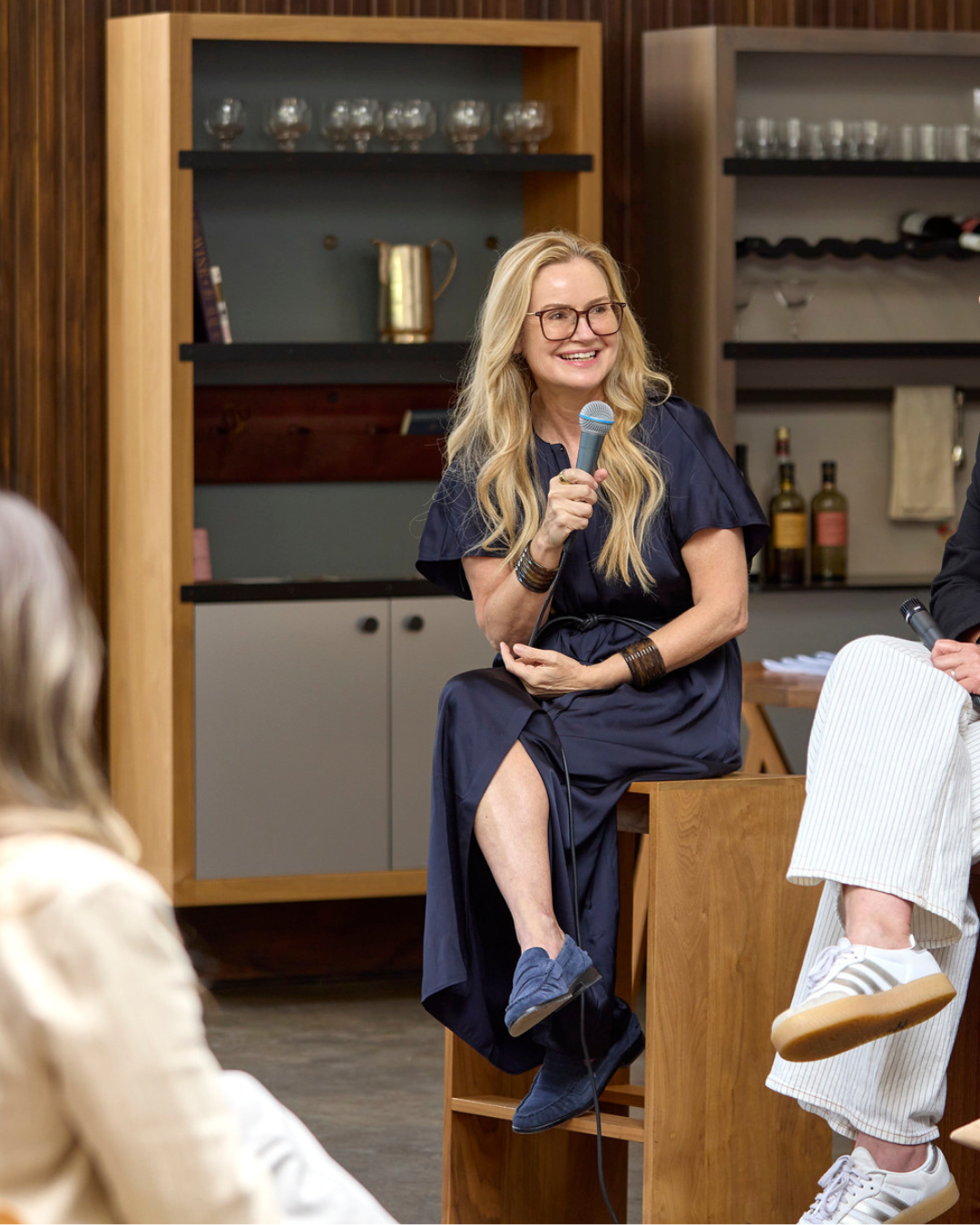
Founded in 2003 by Sabra Ballon, ballonSTUDIO is a San Francisco-based luxury interior design firm specializing in residential interiors, interior architecture, renovations, new construction, and estate properties. Drawing on Sabra's background in architecture, hospitality, and Hollywood set design, the studio creates thoughtfully layered interiors that reflect each family's story while balancing beauty, function, craftsmanship, and long-term care. ballonSTUDIO serves clients throughout San Francisco, the Peninsula, Marin County, Napa Valley, Sonoma, Carmel, and Lake Tahoe.
Media & Speaking Inquiries
Sabra Ballon is available for select podcasts, interviews, panel discussions, and speaking engagements exploring storytelling in interior design, residential architecture, personal collections, craftsmanship, and the relationship between beautiful spaces and everyday function.
